
The Doorway Threshold
The RavenThis flow follows the chamber door as it changes from ordinary boundary into a symbol of inaccessible loss.
increasing Bearing strength in each event
 decreasing
Bearing strength in each eventdecreasingClosed Door
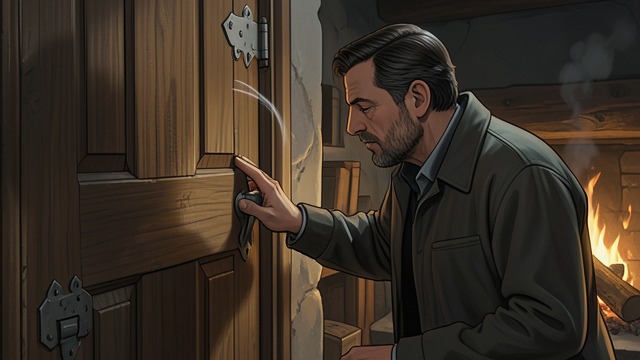
Closed Door
Domestic Boundary
The chamber door separates the narrator from the unexplained sound.
It initially promises privacy and protection.
Hidden Anxiety
Yet the knocking makes the boundary unstable.
The door begins to represent whatever grief has been kept outside awareness.
Visitor Theory
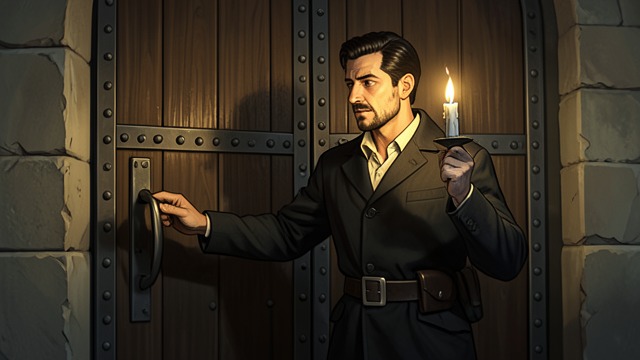
Visitor Theory
Ordinary Explanation
The narrator identifies the disturbance as a late visitor.
This interpretation preserves a familiar social world.
Fraying Security
His repeated qualification reveals that he does not truly believe himself.
The door’s meaning shifts from protection toward suspense.
Opened Door
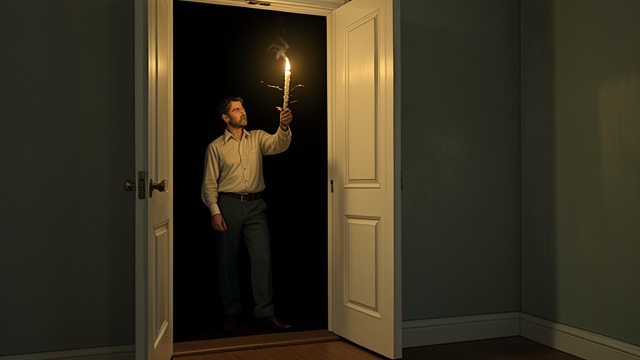
Opened Door
Voluntary Exposure
The narrator opens the door to test his explanation.
His action changes imagined danger into direct encounter.
Empty Passage
The darkness supplies no visitor and no answer beyond an echo.
The promised outside world proves as empty as his interior consolation.
Doorway Occupied
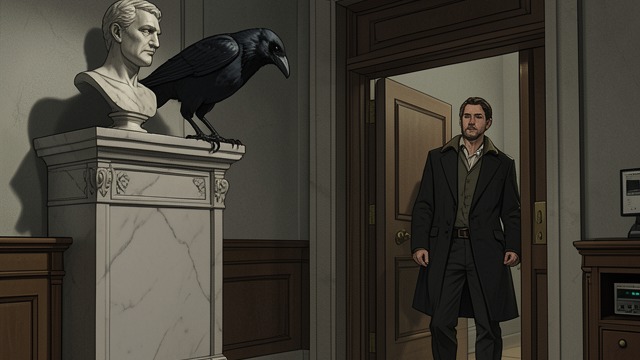
Doorway Occupied
New Sentinel
The Raven perches above the chamber door.
The former exit is now watched by an ominous presence.
Blocked Release
The bird’s position makes departure psychologically difficult even before the final command.
The threshold has become a site of permanent obstruction.
Door as Memorial
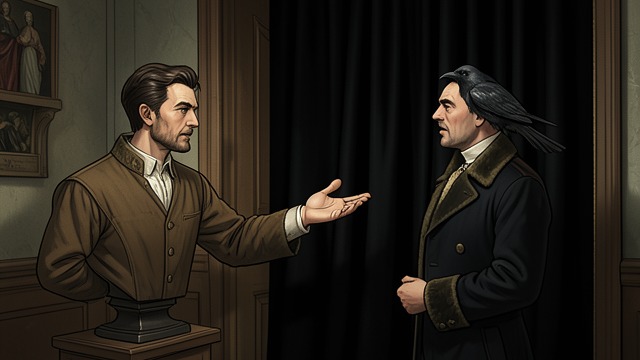
Door as Memorial
Repeated Command
The narrator asks The Raven to quit the bust above the door.
He treats the architecture as inseparable from memory.
Sealed Mourning
The door no longer opens toward renewal.
It frames a memorial scene in which Lenore’s absence and The Raven’s presence remain fixed.
at the opening midnight
during the first knocking
after he gathers courage
after The Raven enters
near the ending
